Log in


If you want the largest image for the least amount of money, a projector is the only choice.

If you want the largest image for the least amount of money, a projector is the only choice.

Pause for a moment and listen. What do you hear? Chances are, somewhere in the background, is the ever-present hum of a road.
More than 4.2 million miles of public roads crisscross the lower 48 states—enough to reach the Moon and back almost nine times. This vast network of roads spiderwebs its way across the contiguous US, leaving only about 5 percent as an inventoried roadless area or wilderness.
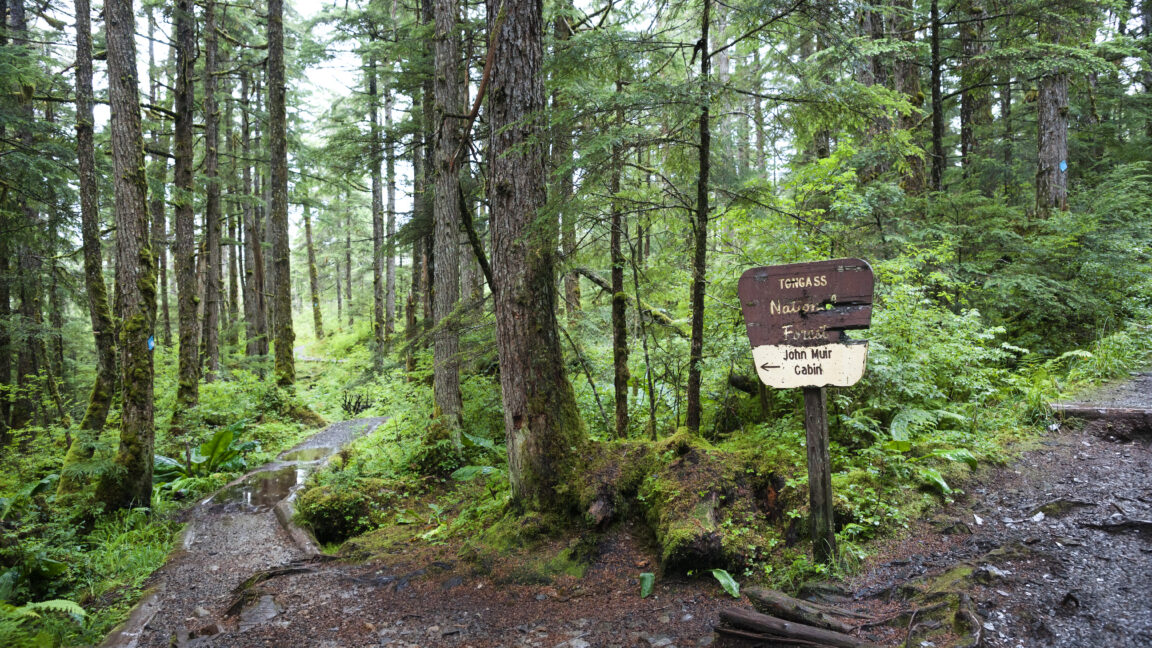
Now, some of those last remaining lands free of roads are under threat from the Trump administration’s proposed rollback of the 2001 Roadless Rule. That includes southeast Alaska’s Tongass National Forest, where eagles, bears, salmon, and many other species thrive in old-growth coastal forest along the Inside Passage.
In announcing its plan, the administration said rescinding the rule would remove prohibitions on road construction and logging on nearly 59 million acres of national forest, arguing that the rule slowed economic development. A 30-day public comment period on the formal proposal starts once it is published in the Federal Register. Instructions on how to submit comments are included in the proposal.
In Congress, another effort is underway to try to change the law through an amendment to the Wildfire Prevention Act. That change, if approved, would both remove the Roadless Rule and prevent the US Forest Service from reinstituting it in the future, despite overwhelming public support for the rule.
As ecologists who have spent decades studying wilderness and the animals and ecological functions that depend on undisturbed habitats, we believe it’s important to understand that preserving roadless areas has value for environmental health, clean water, wildlife survival and people’s own well-being.
The National Forest Roadless Area Conservation Policy, better known as the Roadless Rule, was issued in January 2001 by President Bill Clinton. It has had overwhelming public support and received more public comments than any other rule in history.
The rule prohibits road construction, maintenance and commercial timber harvest in inventoried roadless areas within the National Forest System. It applies to over 58 million acres across the country, excluding Idaho and Colorado, which have their own state-specific roadless rules. While most of these roadless areas are in the western states and Alaska, 38 total states as well as Puerto Rico host roadless areas.
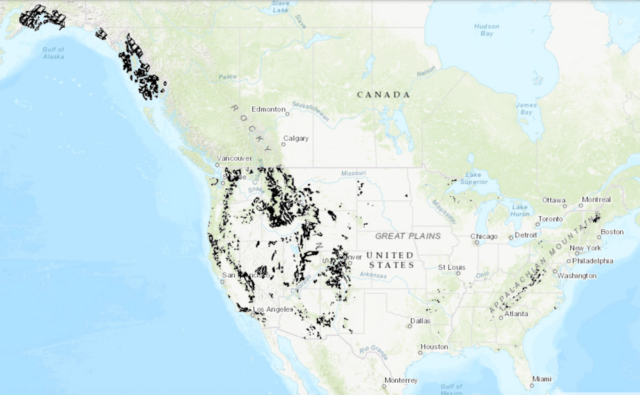 The nation’s inventoried roadless areas are primarily in the western US and include large parts of southeast Alaska, where 14,779,000 acres of roadless areas are within National Forest System land.
Credit:
US Forest Service Enterprise Map Services Program
The nation’s inventoried roadless areas are primarily in the western US and include large parts of southeast Alaska, where 14,779,000 acres of roadless areas are within National Forest System land.
Credit:
US Forest Service Enterprise Map Services Program
The primary goal of the Roadless Rule is to maintain forest health and productivity for future generations. It also helps avoid exacerbating the US Forest Service’s road maintenance backlog by not making new roads.
The Roadless Rule prohibits new road construction, with very limited exceptions, as well as commercial logging in designated roadless areas. It does not restrict other uses that are compatible with the management plan, such as hiking and mountain biking, or resource uses such as grazing livestock and working existing mining claims.
Beyond providing vital habitat for species and enabling healthy forests, the rule protects drinking water for the millions of Americans whose water flows from national forests. It also preserves high-quality recreation opportunities—hiking, camping, hunting, and fishing—that Americans cherish.
While roads can provide benefits, such as access to forests, they can also do ecological harm.
Roads enable invasive weeds to spread by being carried on vehicle tires and deposited in exposed soils, erode sediments into streams and fragment habitat that wildlife rely on. Vehicles directly kill and injure animals through collisions. They occasionally start fires, too. A recent study found that fires are more likely to start in areas with roads than in areas without.
Studies show that road noise displaces wildlife, increases stress, and can affect wildlife behavior patterns at distances of over a mile from the road.
And roads don’t just cause problems for species on land. Most roads cross streams and rivers, which requires building a way for those waters to keep flowing under the road (structures called culverts). While culverts can be designed to allow fish to pass through and maintain ecological connections, they are rarely built to do so. This leads to declines in the health of fish populations and can leave some species locally extinct.
Inventoried roadless areas are among the most ecologically intact and wildest places left in the United States, yet—unlike Wilderness Areas and National Parks—there are no signs acknowledging their boundaries when you enter one.
Most are part of larger ecosystems, directly adjacent or ecologically connected to better known national parks and wilderness areas. Removing Roadless Rule protections would erode ecological buffers to these more famous protected lands.
For some species, roadless areas protect critical core habitat. For instance, over half the suitable habitat for relictual slender salamander, a critically imperiled species native to the Sierra Mountains of California, occurs in a roadless area. Nearly 40 percent of Mount Pinos, lodgepole chipmunk, an imperiled subspecies of the lodgepole chipmunk, also live in roadless areas in California.
Research shows that every formal roadless area provides habitat for at least two wildlife species of conservation concern – those facing risks to their long-term survival – with the median roadless area supporting 10 of these imperiled species. Some Arizona roadless areas contain habitat for up to 62 of these species.
Roadless areas also protect watersheds that supply drinking water to 47 million Americans.
Without this protection, these watersheds would still provide water, but their long-term health and hydrological sustainability could be compromised if roads block stream flow and increase sediments flowing into waterways. The result can be higher costs for water purification.
The Forest Service’s own watershed health assessment, known as the Watershed Condition Framework, uses road density as a key indicator of conditions that can disrupt water quantity and quality.
The Trump administration’s proposed rollback, expected to be formalized in 2026, would open these last wild places to development, fragmenting habitats that can never be restored.
The American public spoke loudly in 2001 when they supported the Roadless Rule. Two decades later, the public comments submitted on the rescission notice overwhelming opposed rolling back the rules, a Center for Western Priorities review found, reaffirming that US roadless forests remain as vital and valued as ever.
Protecting these areas is about promoting healthy ecosystems on public lands so they can provide hiking, hunting, and fishing opportunities for generations to come to enjoy the tranquility of being in nature.
Mariah Meek, Associate Professor of Integrative Biology, Michigan State University and Travis Belote, Assistant Professor of Landscape Ecology, Montana State University. This article is republished from The Conversation under a Creative Commons license. Read the original article.
The Centers for Disease Control and Prevention is excluding two measles deaths reported by Pennsylvania health officials last week from its latest update of national measles data, publicly challenging the accuracy of the state's death determinations in an extraordinary move that breaks precedent that states are the arbiters of case and death determinations, not the CDC.
The New York Times reported Monday that the CDC's new director, Erica Schwartz, is behind the decision. Schwartz—less than a month into the job—reportedly ordered CDC staff to add an unusual statement onto the CDC's website for measles surveillance data. The statement notes that the update will not include the deaths reported by Pennsylvania and continues: "At this time, available information does not establish whether measles caused or contributed to the deaths or whether the individuals died from other causes while infected with measles."
The Washington Post reported Monday that the CDC had actually changed the information provided on that page multiple times over the weekend. On Saturday, August 29, at 2:33 pm ET, the website listed the total measles deaths for 2026 as "0" in a chart. On Sunday, August 30 at 12:09 pm ET, the chart was updated to list the total deaths for 2026 as "2." There was also a note underneath the chart that read: "Health departments make determinations about measles-associated deaths and share relevant information with CDC." By the 3:23 pm ET Sunday, the chart was changed again to delete the two deaths, replacing it with an asterisk as a reference to the unusual statement about the deaths not being included. The asterisk and statement remain as of Tuesday.
The move comes after anti-vaccine Health Secretary Robert F. Kennedy Jr. got into a public spat with Pennsylvania Governor Josh Shapiro over Kennedy's anti-vaccine rhetoric. Kennedy then shared measles misinformation on social media amid news of the deaths, then suggested without evidence that the state may have "fabricated" the deaths and that the governor announced them with "giddy delight."
State health officials initially refused to release information about the two people who died, including their ages, citing privacy concerns. But news has since trickled out that one of the people who died was a newborn and, according to reporting Tuesday by the Times, the other was a child. Both were unvaccinated and from Lancaster County. Outside medical experts have criticized the lack of information provided from health officials, leaving more space for doubt and misinformation.
Controversy about the deaths flared after Lancaster County Coroner Stephen Diamantoni, a Republican first elected coroner in 2007, claimed that a pathologist determined that the newborn died of a ruptured spleen and didn't believe measles played a role. The baby was born infected with the virus, according to testing, and had evidence of a measles infection in lung tissue. The newborn's mother was severely ill from measles at the time of birth, according to reporting from The Atlantic, which spoke with the baby's parents amid the uproar.
The parents, who are Amish, were not aware that their baby's death was in the national news and a source of contention. They believed without question that their baby died of measles. The mother said she contracted the virus amid the ongoing local outbreak and after several of her other children had fallen ill. She became so ill she couldn't speak above a whisper and "didn’t have a single piece of energy" as she went into labor. The baby was born with a pulse, but was not breathing. The baby, a boy, was declared dead less than a half-hour later, after paramedics had been called and attempted to give the newborn oxygen and chest compressions, the parents said.
Measles can cause a baby's spleen to enlarge and the fibrous tissue around the organ to thin. In such a vulnerable state, the spleen can rupture during birth. Diamantoni has claimed that the pathologist who examined the newborn didn't report an enlarged spleen. But after a spleen ruptures it can be difficult to determine whether it was previously enlarged or not, according to Paul Offit, a vaccine and pediatric infectious disease expert at Children’s Hospital of Philadelphia. Overall, a ruptured spleen is extremely rare in newborns, he says.
Offit told reporters that he has been in touch with state officials and learned enough about the two deaths to say that "these patients would not have died were it not for measles." He has publicly called for the coroner to provide an alternative explanation for the baby's ruptured spleen if it was not from measles.
Far less is publicly known about the second death, which was reported as being in a child as of Tuesday. Though Diamantoni is the coroner for Lancaster County, where both the deceased baby and child lived, the county does not have its own local health department and gets information from the state health department. Diamantoni told The Washington Post late Monday that he had only recently received information about the second death and that his office is still working to determine the cause of death. It's unclear on what grounds they are challenging the state's determination that it was caused by measles without having the information previously.
Last week, amid Kennedy's comments, the CDC said on social media that "CDC is working to determine what actually occurred" and claimed that the "Governor’s Office has not provided CDC with information relevant to the outbreak and has declined our offers of assistance."
The state's health department officials said they reported the deaths to CDC staff on August 25 prior to their public announcement and met with CDC officials the next day.
As a spokesperson for the state health department told the Times, "Every reported measles case is thoroughly reviewed to confirm it meets the Centers for Disease Control and Prevention’s (CDC) case definition for a measles case. To date, [the state health department] has provided all required epidemiological data to the CDC."
As an ardent anti-vaccine activist, Kennedy has a long history of spreading vaccine misinformation and disinformation, downplaying the severity and risks of vaccine-preventable diseases and spreading doubt and misinformation about vaccine-preventable deaths. Amid the pandemic, Kennedy and like-minded allies similarly assailed reports of deaths from COVID-19, arguing that they were deaths "with" the deadly virus not "from" it. While Kennedy's pattern is clear, outside experts have raised concern about whether new CDC director Schwartz—who has championed use of vaccines in the past—would stand up to Kennedy's anti-vaccine agenda.
The CDC's decision to challenge the death determinations of Pennsylvania health officials appears to confirm those fears and stand to only exacerbate the flagging public health systems in the US, experts say. “This is a moment for the CDC director to speak publicly about the outbreak," Debra Houry, CDC's former chief medical officer, told the Times. "Delays in reporting of data further erode trust and create confusion."


Read more of this story at Slashdot.
The standard explanation for why rain causes corrosion is that water carries dissolved salts and acids to a surface, constant drumming of raindrops abrades whatever protective coating is on it, and oxygen does the rest. Nearly all our tools to prevent this—paints, polymer films, or oxide layers—are built around this idea. But we’ve apparently been missing something important about the rain.
A new study led by Zhongyuan Ni, Rüdiger Berger, and Hans-Jürgen Butt at the Max Planck Institute for Polymer Research in Mainz, Germany, has shown that water drops routinely arrive at a surface carrying an electrical charge large enough to punch through an insulating coating. Not scratch it. Not slowly dissolve it. Electrically blow a hole in it, the way a spark jumps a gap.
The starting point of the study is a phenomenon called "slide electrification," which has only been properly quantified in the past few years. When a water drop slides across an insulating surface like a leaf, a painted wall, a windowpane, or a plastic panel, it strips charge from that surface and leaves an opposing charge behind. The voltages involved are not trivial. Drops charged this way have been measured at up to 9,000 volts.
The question Ni, Berger, Butt, and their colleagues asked was what this charge does to the surface that the drop lands on next. To find out, the team released 35-microliter water drops, about the size of a large raindrop, containing a pinch of salt to mimic rainwater, onto a surface tilted at 50 degrees. The drops slid about four centimeters, picked up a charge, rolled off the edge, and then fell five millimeters onto a copper plate coated with a 60-nanometer film of Teflon, which is one of the most chemically resistant coatings on the market today.
The tilted surfaces were mostly chosen to mimic raindrops in the real world. One was a leaf from a Tradescantia spathacea plant growing in one of the researchers' offices. Another was a PVC foam board from a hardware store. The third one was a sheet of transparent polystyrene sold as window glazing. Only the fourth one, the fluorinated coating on quartz, was more of a lab creation than something people usually see everywhere around them. The charges the drops picked up ranged from 0.2 nanocoulombs off the leaf to two nanocoulombs off the fluorinated quartz. A nanocoulomb in something the size of a raindrop works out to be a few thousand volts.
After 3,000 drops, roughly equivalent to an afternoon of moderate rain, the copper plate beneath all four surfaces had corroded, despite its Teflon coating. Atomic force microscopy of the impact zones found pits several nanometers deep in places deeper than the entire thickness of the Teflon film, meaning the damage ran clean through the coating and into the metal. Drops that fell directly onto the target without sliding first (and therefore carried no charge) left the surface pristine after the same 3,000 impacts.
The scientists managed to catch the mechanism in the act with high-speed cameras.
In the videos, researchers saw that a neutral drop approaching the copper plate keeps a smooth, round bottom right up until contact. A charged drop does something very different. As it nears the surface, its underside stretches into a Taylor cone—a sharp shape a liquid takes when electrostatic force overwhelms its own surface tension. The Taylor cone was a sign that the electric field between a drop and metal had gotten strong enough to deform water.
The field’s strength should keep climbing as the gap closes. To quantify this effect, the team modeled the drop as a conducting sphere hovering over a conducting wall, then calculated how the field strength scales with distance. A drop carrying two nanocoulombs, they found, reaches 60 kilovolts per millimeter, the breakdown threshold of Teflon—the electric field strength at which an insulator stops insulating. This happens while the drop is still roughly 10 micrometers away from the surface. For a polystyrene coating, which gives up at 19 kilovolts per millimeter, breakdown happens 50 micrometers out.
Because the coating stops being an insulator when its breakdown threshold is reached, the charge rips through it in a miniature dielectric breakdown, the same failure mode that kills capacitors and transformer insulation. The charge measurements scientists conducted confirm the transfer is nearly total—a drop arriving with two nanocoulombs dumped 1.8 of them into the copper on impact and bounced away with 0.016 nanocoulombs, less than 1 percent of what it started with.
Because the amount of charge scales with how far a drop slides and the coating's ability to resist scales with its thickness, the effect has a limit. Twelve-micrometer polystyrene films got punched through while 130-micrometer films survived.
Most of the paint coatings we use are just a few micrometers thick, and the researchers note that nanocoulomb-scale charges can break through most of these.
Scientists found that once the coating has been breached, the exposed metal sits in a salty drop with a fresh electrical potential across it. This leaves the ordinary electrochemistry that causes corrosion free to work on the surface it was supposed to be locked out of.
The researchers identified the corrosion products on copper by Raman spectroscopy and X-ray diffraction. They found cuprous oxide and basic cupric chloride, the pale green compound familiar from weathered copper roofs. Elemental mapping of the damaged zones showed oxygen and chlorine flooding in and fluorine and carbon from the Teflon flooding out—exactly what should happen when a coating has been disrupted.
The polymer itself gets chemically rearranged, too. Polystyrene films hit by charged drops developed rough patches that glowed green under a laser, which plain polystyrene does not do. Nanoscale infrared spectroscopy traced the fluorescence to newly formed carbon-carbon and carbon-oxygen double bonds, the signature of a material that has been electrically cooked into something new.
The team also did impedance measurements to find out how fast the protection degrades. After 10,000 charged drops, the Teflon film's barrier properties had fallen further than they did after four hours of continuous immersion in salt water—a comparison chosen because four hours is roughly the total wet contact time the drops deliver.
On top of that, once damage starts, it accelerates. A breached spot wets more easily, holds water longer, and grows. After 50,000 drops, the corroded patch was over a millimeter across.
In their last experiment, the team built a plate that was quartz on two-thirds and copper on the other third, then coated the whole thing with a single uniform layer of Teflon that provided a featureless surface.
Charged drops sliding across that plate corroded a line along the buried quartz–copper boundary. The reason is that a charged drop doesn't react to the surface it touches but instead reacts to whatever lies close enough to supply the opposite charge. There’s no opposing charge over the quartz, and the field stays weak. The moment the drop crosses onto the copper, the metal's free electrons rearrange to face it—an equal and opposite charge gathers just beneath the coating, and the field between the two rises rapidly. The Teflon is caught in the middle.
The authors argue that this has profound implications for composite materials in general. Anywhere a conductive or high-permittivity component is embedded in an insulating matrix, sliding charged drops should find it. Bridges, hulls, painted steel, the polymer housings of outdoor electronics, and metalwork on historic buildings are all candidates.
Charged drops, the team notes in the paper, form naturally in clouds, thunderstorms, ocean waves, fountains, and waterfalls, as well as in industrial processes like electrostatic spraying and inkjet printing. The mechanism they describe, they claim, has been running everywhere without anyone really measuring it.
The paper's data indicates that making protective layers thicker is a possible fix. The 130-micrometer polystyrene films came through untouched because spreading the same voltage across ten times the distance drops the field below what the material can tolerate. Thickness, though, is not always an option—optical films have to stay clear, protective layers on aircraft have to stay light and flexible, and the barriers on outdoor electronics are thin by design. What’s really needed is a coating specified for how much electric field it can tolerate, and most of what we have is picked based on what it resists chemically.
Nature, 2026. DOI: 10.1038/s41586-026-10941-6

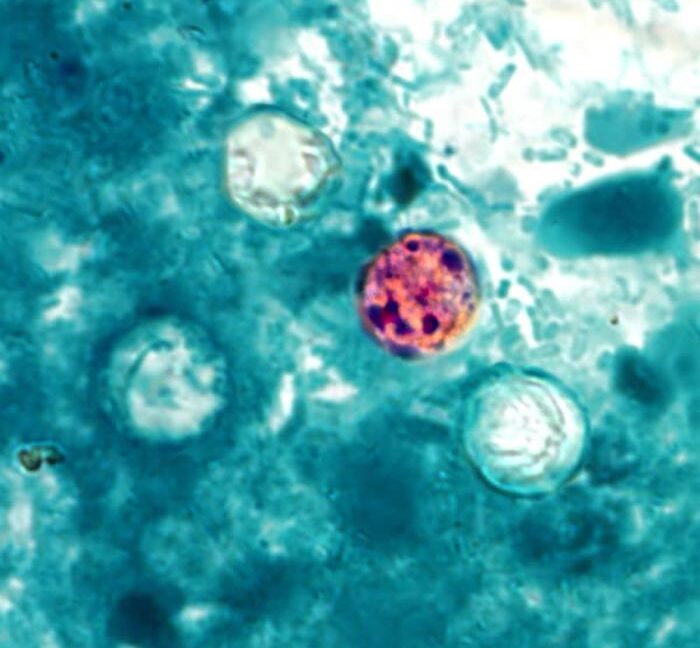
The Trump administration is halting vital federal research on the foodborne parasite Cyclospora, despite the record-breaking, nationwide outbreak of the diarrheal pathogen, according to Politico.
Of the three research programs that represent nearly all of the Cyclospora work at the US Department of Agriculture, two have been defunded, and the third is about to lose every scientist working on it. The Trump administration is shuttering the USDA's Beltsville Agricultural Research Center near Washington, DC, and moving its work to a location in Iowa. That includes relocating the remaining Cyclospora research.
Although the research is still funded, insiders told Politico that not one of the scientists working on the project plans to relocate from Maryland to Iowa. Instead, they are either retiring, being reassigned to a different project, or leaving the USDA's research services.
"They will have no parasitologists," one USDA employee told Politico. "There will be a big knowledge gap."
The US is experiencing the largest Cyclospora outbreak ever recorded. The Centers for Disease Control and Prevention has tallied nearly 30,000 confirmed and probable cases this summer. At least 922 people have been hospitalized with cyclosporiasis, and two have died. Since 2018, the US has generally reported between 2,000 and 5,000 cases, though the US reported 1,180 cases in 2025.
Cyclospora is difficult to work with in a laboratory compared to other foodborne pathogens, such as E. coli or Salmonella. Cyclospora grow and reproduce only in the human gut, not in lab conditions. Although the parasite can be isolated from feces in labs, it can sometimes be difficult to fish out; it can be shed intermittently or at low levels, requiring repeat fecal samples from an infected person. The parasite is also harder to study using genetic techniques. It has a much larger genome than bacteria, making genomic sequencing costlier and more laborious. It also reproduces sexually, meaning each generation will have new mixes of genes, making it harder to trace back lineages of the parasite to a single contaminated food. That's in contrast to bacteria, which reproduce asexually, creating clones that are often nearly identical and easy to trace.
With this year's outbreak, researchers hoped for a surge in understanding of the parasite. "We see this as an enormous opportunity, this current outbreak, to have really a lot of samples that could help us understand these outbreaks better," another USDA employee told Politico. However, people who worked on the defunded Cyclospora programs are barred from doing any more research and are simply preserving samples they already had from previous outbreaks.
While funding may be restored at a later time, experts said the disruption to the research will be difficult to overcome. "The bigger impact is that there are very few people in the world that study these [parasites]," Joelle Mosso, associate vice president for science growers at the Western Growers Association, a trade group representing produce farmers, told Politico. "It’s not just replacing the lab. It takes decades to build expertise."